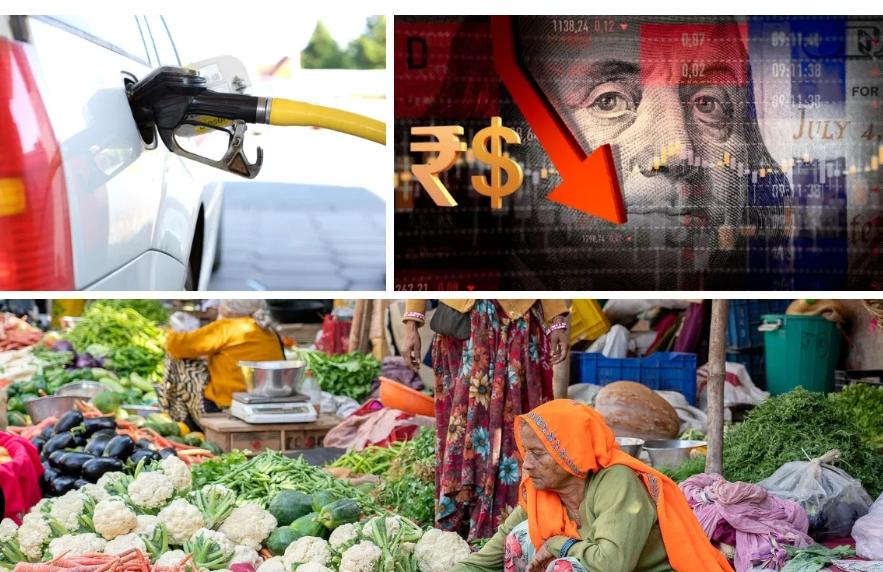
Rising petrol and diesel prices drive inflation, impacting the common man’s budget by increasing costs of essentials and public transport. A weakening Rupee further amplifies import costs, contributing to higher living expenses and reduced spending. Government austerity measures and RBI’s monetary policy are crucial in navigating these economic challenges and ensuring currency stability. CA Vikas Kumar Tiwari, spoke on the impact of the rise in inflation, hike in petrol and diesel prices, falling Rupee and PM Narendra Modi’s appeal for austerity measures.Tiwari: The Government made a decision to increase petrol and diesel prices. This decision is mainly because of the rising cost of oil problems in the world that affect trade and the need to keep the country’s currency, i.e., Rupee, stable. While this step may be necessary for the country’s economy it will definitely affect the common man. Petrol and diesel prices have an indirect impact on how much people spend at home. This is because the cost of transportation affects every aspect of the economy including food, farming, moving goods and daily items which they purchase.For the people, even a small increase in fuel prices can greatly affect their monthly budget. People who use their vehicles will have to pay more for commuting and the cost of public transportation may also go up. Additionally higher transportation costs usually lead to increase in prices of essential things like vegetables, milk, groceries and manufactured products. This means that people will have money to spend on other things and it will especially affect the middle class and those with lower incomes.
However, it has to be seen how much impact will be the impact. If the cost of crude oil stabilises and the Government helps by giving subsidies or making taxes fairer the long-term effect may not be as bad. In the short term the rise in fuel prices will likely make people spend less and reduce the money they have for extra things.